
Most C-Bus keypad problems are not a dead keypad. The little indicator lights on your switches are usually telling you exactly what is wrong, if you know how to read them.
C-Bus keypads don’t switch your lights directly. When you press a button, the keypad sends a message along the C-Bus network to a relay or dimmer in your switchboard, and that unit turns the light on. If anything along that path has a problem (power, wiring, programming or a faulty unit), the keypad can look broken even when it isn’t.
In this guide, I will walk you through the most common keypad and indicator light problems Sydney homeowners call us about. For each one, you’ll find what’s likely causing it, what you can safely check yourself, and when it’s time to call a licensed C-Bus specialist.
Quick guide: what your keypad is telling you
Find the symptom that matches yours, then jump to that section below.
| What you see | What it usually means | Can you fix it yourself? |
| Button flashes rapidly when pressed, light doesn’t respond | The keypad can’t talk to the rest of the system | Sometimes. Try the basic checks first |
| Keypad only works on the second or third press | Messages are getting lost on the network | Rarely. Usually needs a diagnosis by a qualified and licensed C-Bus technician |
| Keypads stopped working after a storm or blackout | Power or a C-Bus unit was affected by the event | Sometimes. A breaker or power reset may fix it |
| All indicator lights stuck on, keypad does nothing | The keypad has frozen or failed | Rarely. May need replacing |
| Indicator lights up but the light stays off | The keypad is fine; the problem is further along | Check the breaker. Otherwise call us |
| Indicator lights don’t behave how you want | A programming setting | No, but it may be a quick fix for a programmer |
| A light has no working switch | A keypad was removed or never programmed | No. Needs a technician |
Before you call: 5 safe checks anyone can do
These checks take a few minutes and need no tools. Please don’t remove keypads from the wall or open your switchboard. Leave that to a licensed professional.
- Check your circuit breakers. Go to your meter box or switchboard and look for any lighting breakers that have tripped. If one has, switch it back on. If it trips again, leave it off and call an electrician, preferably one that has some familiarity with C-Bus systems.
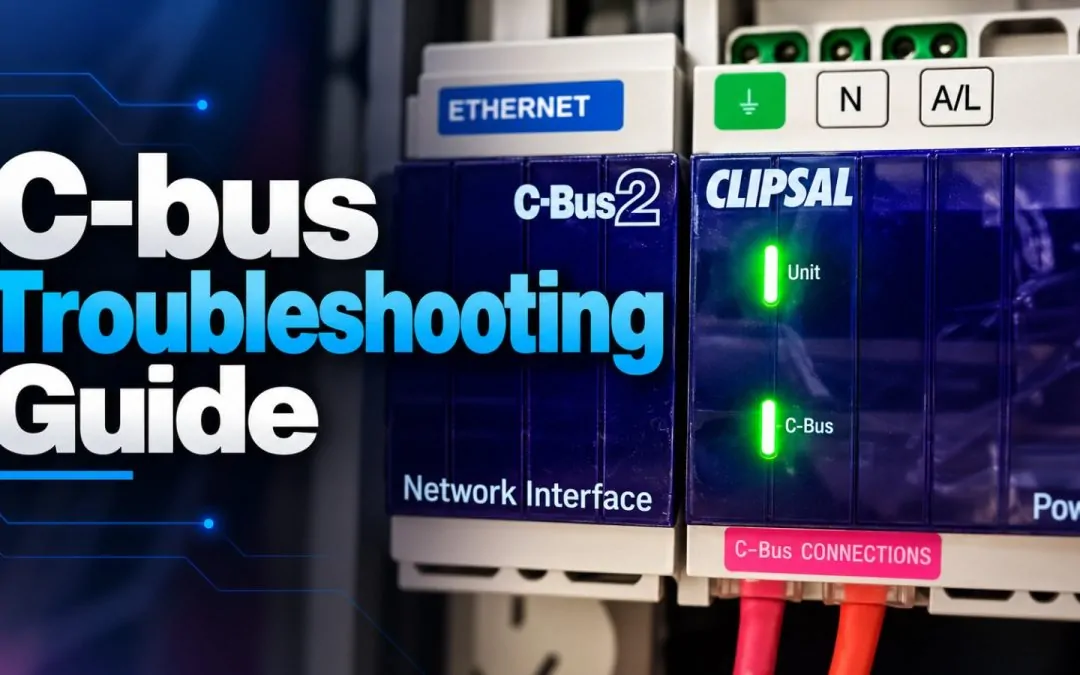
- Look at the C-Bus units in your switchboard. Your relays and dimmers usually have small indicator lights marked “Unit” and “C-Bus”. Note whether the “C-Bus” indicator is on, off or flashing, just look, don’t touch. If the “C-Bus” indicator is anything other than “On” solidly, call us.
- Try a different keypad. If another switch controls the same light, try it. If it works, the problem is likely the first keypad. If neither works, the problem is likely elsewhere in the system.
- Check whether it’s one keypad or the whole house. One faulty switch points to a different cause than every switch in the house playing up.
- Write down what you see. Which switches are affected, what the indicator lights are doing, and when it started (for example, after a storm). This helps us find the fault faster and keeps your call-out time down.

1. Keypad flashes when pressed and nothing happens
What you’ll notice: You press a button and its indicator light flashes quickly (on some keypads it alternates blue and orange), but the light doesn’t turn on or off. Sometimes it’s one switch, sometimes every switch in the house.
Why it happens: This is the most common C-Bus fault we see. The flashing is the keypad’s way of saying “I sent the message, but nobody answered.” The keypad itself is often fine. The usual causes are:
- Low C-Bus voltage. C-Bus runs on its own low-voltage power. If this falls below critical levels, keypads can’t communicate reliably.
- A lost timing signal. C-Bus needs a “clock” signal to sustain reliable communications. If the unit providing this fails, the whole network stops communication.
- A wiring fault. A damaged cable, loose connection or water in a switch box can break the communication path.
- A faulty keypad. If only one switch flashes and all the others work, the keypad itself may have failed.
What you can try:
- Run through the five safe checks above.
- If every keypad is flashing, check whether the “C-Bus” lights on your switchboard units are off or flashing. Note it down for your technician.
- If only one keypad is flashing, try another switch that controls the same light.
When to call us: If the basic checks don’t fix it. Finding the cause means measuring the C-Bus voltage and running diagnostic software on your network, which needs a licensed C-Bus specialist. If a power supply in the switchboard needs replacing, that work must be done by a licensed electrician.
2. Keypad only works on the second or third press
What you’ll notice: You press a button and it flashes but nothing happens. You press again and the light finally comes on. It may come and go, working fine one day and playing up the next.
Why it happens: Your keypad is sending its message, but the message is getting scrambled or lost on the way. The most common cause is electrical “noise” on the C-Bus network. Some relays and dimmers have built-in power supplies, and when one starts to wear out it can keep working while quietly interfering with every message on the network. Weak power supplies and loose connections can cause the same thing.
Because the fault comes and goes, it’s one of the trickiest to pin down. Replacing keypads at random rarely fixes it.
What you can try:
- Note which keypads are affected and what time of day it happens.
- Check whether it’s worse when lots of lights are on at once.
- Avoid repeatedly turning the power off and on. It can hide the fault for a while without fixing it.
When to call us: As soon as it becomes a regular annoyance. A licensed C-Bus technician can run several diagnostic tests on your network to find which unit is causing the interference, so only the faulty part gets replaced.
3. Keypads stopped working after a storm or blackout
What you’ll notice: After a thunderstorm, power outage or tripped breaker, some or all of your keypads have stopped working. They may be flashing, completely dark, or simply not responding.
Why it happens: C-Bus is electronic equipment, and power surges and lightning strikes can damage it. A storm can knock out a C-Bus power supply, damage a relay or dimmer, or freeze a keypad. Sometimes nothing is damaged at all and a breaker has simply tripped and not been reset.
What you can try:
- Check your switchboard for tripped breakers and reset them (see the safe checks above).
- Check whether the “Unit” and “C-Bus” lights on your switchboard units are on.
- If some keypads work and others don’t, try a working keypad that controls the same lights. This tells you whether the problem is the keypad or something further along.
When to call us: If resetting the breakers doesn’t bring everything back. A licensed C-Bus specialist can scan your network to see which units are missing or not responding, then check whether any programming was lost. Damaged units in the switchboard should only ever be replaced by a licensed electrician.
Tip: Ask your electrician about surge protection for your switchboard. It’s far cheaper than replacing C-Bus units after the next storm.
4. All indicator lights stuck on and the keypad does nothing
What you’ll notice: Every indicator light on one keypad is lit up solid, even though the lights it controls are off. Pressing the buttons does nothing.
Why it happens: When every indicator on a keypad stays on and the buttons don’t respond, the keypad has usually frozen or failed. Its electronics have stopped working properly, so it can’t send messages or show the real status of your lights. Heat can play a part too. Some faulty keypads only play up once they warm up.
What you can try:
- Check whether other keypads in the house are working normally. If they are, the problem is almost certainly this one keypad.
- Try another switch that controls the same lights so you’re not left in the dark.
When to call us: In most cases the keypad needs replacing. A C-Bus programmer can confirm the keypad is the culprit, fit a replacement and load your existing settings onto it, so your buttons work exactly as they did before. Don’t buy a replacement keypad yourself first. It needs to match your system and be programmed before it will work.
5. Indicator lights up but the light doesn’t come on
What you’ll notice: You press the button, the indicator light comes on as normal, but the room light stays off.
Why it happens: This is actually good news for your keypad. A normal indicator light means the keypad is working and its message got through. The problem is further along. Common causes are:
- A tripped breaker on the lighting circuit.
- A faulty relay or dimmer channel in the switchboard that is receiving the message but not switching the light.
- A blown globe or faulty light fitting.
- A dimmer that doesn’t suit the type of globe, which is common after an upgrade to LEDs.
What you can try:
- Check the lighting breakers in your switchboard.
- Check whether other lights on the same keypad work.
- Try a new globe if it’s easy and safe to reach.
- Think about whether anything changed recently, such as new LED globes or new light fittings.
When to call us: If the breaker and globe aren’t the problem. A C-Bus programmer can test whether the relay or dimmer is receiving the command. If a unit in the switchboard has failed, a licensed electrician replaces it and the programmer sets it back up.
6. Indicator lights don’t behave the way you want
What you’ll notice: Nothing is broken, but the indicator lights annoy you. Common complaints are:
- They’re too bright in the bedroom at night.
- A button’s light stays on after the lights have gone off.
- You can’t find the switch in the dark because the indicators are too dim or off.
- A scene button stays lit after you’ve changed the lights another way.
Why it happens: How each indicator behaves is set in your system’s programming. Brightness, whether it follows the light or stays on as a locator, and how scene buttons show their status are all settings. Sometimes the settings interact in ways that aren’t obvious. For example, an overall brightness setting can override what an individual button is meant to do.
What you can try: These settings can’t be changed from the keypad itself. Make a list of which keypads bother you and how you’d like them to behave.
When to call us: Any time. This is a programming job, not a repair, and it can usually be sorted in the same visit as other changes. It’s a good chance to fix any buttons that don’t do quite what you want, too.
7. A light has no working switch
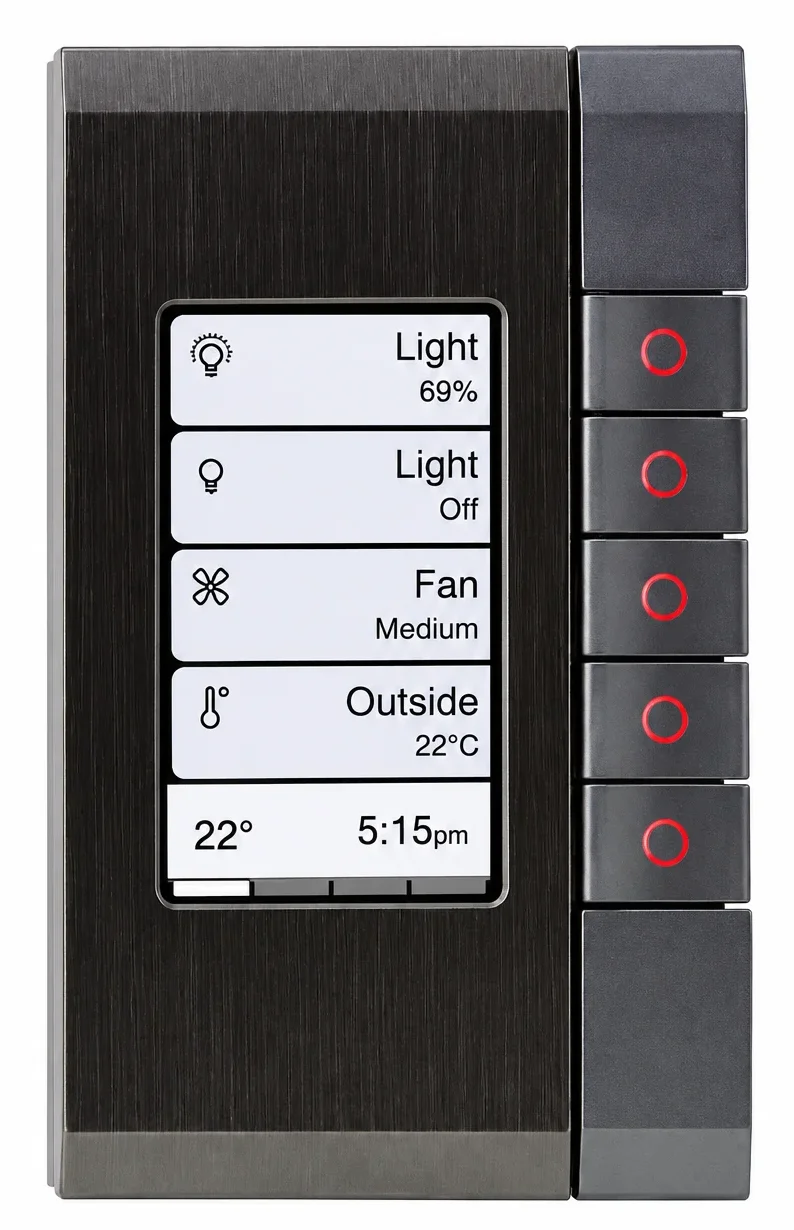
What you’ll notice: A light that used to have a switch no longer does. This often happens after renovations, when a keypad has been removed, covered up or replaced with a standard switch by someone unfamiliar with C-Bus. The light may still turn on from the switchboard but not from the wall.
Why it happens: With C-Bus, the keypad and the light aren’t wired directly together. The link between them lives in the programming. If a keypad is removed, that link disappears with it, and a new keypad won’t control anything until it’s programmed.
What you can try:
- Check whether another keypad in the house has a spare or unused button.
- Don’t try to connect a standard light switch to C-Bus cabling. It won’t work and can damage the system.
When to call us: A C-Bus programmer can find which channel controls the light and assign it to a spare button on a nearby keypad, or program a new keypad if one needs to be fitted. If a new keypad is going into the wall, an electrician can install it and the programmer sets it up.
C-Bus programmer or electrician: who do you call?
Call a licensed C-Bus specialist first for keypad problems. Most of these faults need someone who can read your system’s programming and run diagnostics. A general electrician without C-Bus experience can test the power but usually can’t see what’s happening on the network.
| Job | C-Bus programmer | Licensed electrician |
| Finding the cause of flashing or unresponsive keypads | Yes | – |
| Testing C-Bus voltage and network communication | Yes | – |
| Replacing a faulty keypad and loading its settings | Yes | – |
| Changing indicator light settings or button functions | Yes | – |
| Reassigning a light to a different button | Yes | – |
| Replacing power supplies, relays or dimmers in the switchboard | Sets them up after | Yes |
| Fixing tripping breakers or mains wiring faults | – | Yes |
| Repairing damaged cabling in walls | – | Yes |
| Fitting surge protection | – | Yes |
A proper diagnosis also stops you paying for parts you don’t need. Homeowners are sometimes told their whole C-Bus system needs replacing, when the real fault is one power supply or a single switch.
What to tell us when you call
The more you can tell us up front, the faster we can find the fault. Before you call, have these answers ready:
- Is it one keypad, a few, or every keypad in the house?
- What are the indicator lights doing: flashing, stuck on, or dark?
- What are the “Unit” and “C-Bus” lights doing on your switchboard units?
- When did it start? Was there a storm, blackout, renovation or other work done recently?
- Have any breakers tripped?
- Roughly how old is your C-Bus system, and do you know who installed it?
Keypads playing up? Contact Control Freq to book a C-Bus diagnosis. Our team will track down the real cause and get your lights working the way they should.
Our technicians are fully licensed electricians who are also specialists in C-Bus diagnosis and repair. Once our technicians diagnose the issue, they can provide recommendations and in many cases referrals to trusted electrical contractors for any further electrical repairs, beyond any C-Bus work if necessary.

Harry Simidis
Harry Simidis is the owner of Control Freq, a Sydney lighting control and home automation specialist. He has worked in the controls industry since graduating from the University of Technology Sydney in 1994 with a Bachelor of Electrical Engineering (Computer Systems), and has served as both a CEDIA board member and Certified Instructor.
Today he leads a team that programs, repairs and maintains existing Clipsal C-Bus systems, including older and undocumented ones, alongside Dynalite, KNX, DALI and RAPIX. He has lectured at industry events, is considered a subject matter expert in lighting control systems and has been published in industry magazines.